

Sustainability Approach and Objectives
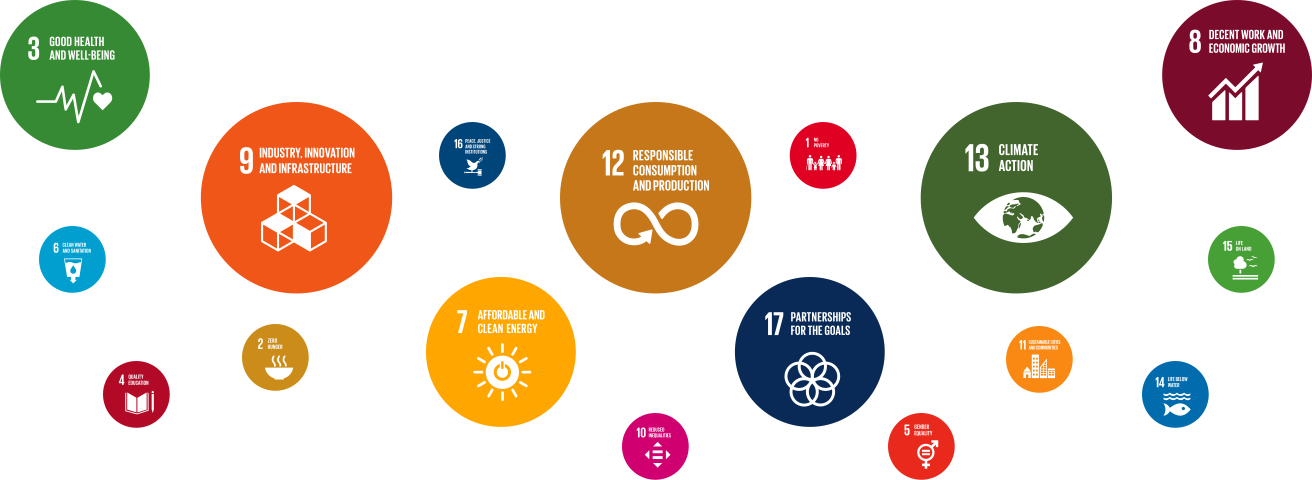
United Nations Sustainable Development Goals (SDGs)

Implementation in alignment with the United Nations Global Compact (UNGC) principles
The Company recognizes the importance of supporting the United Nations Global Compact and is committed to operating in alignment with internationally recognized sustainability principles. This commitment aims to contribute to the achievement of the United Nations’ objectives, namely the Sustainable Development Goals (UN SDGs), which the Company has adopted as a guiding framework for its sustainability practices.
Corporate Busines Conduct Framework
The Company drives its organization in accordance with sustainable development principles by integrating sustainability into its core business processes. A sustainability management framework has been established to foster long-term organizational resilience, encompassing three key dimensions: (1) governance/economic, (2) social, and (3) environmental.
This framework is informed by an analysis of the Company’s vision, mission, corporate culture, value chain, business strategy, risks and opportunities, as well as industry direction and trends. Such a comprehensive assessment enables the Company to clearly understand its organizational context and supports the identification of key stakeholders and material sustainability issues that require effective management.
This approach ensures that sustainability considerations are systematically embedded in decision-making processes, supporting the Company’s ability to achieve strong and sustainable long-term growth.



- Corporate Governance
- Anti-Corruption
- Tax Management
- Risk Management
- Business Continuity
- Products and Services Responsibility

- Social Supply Chain Management
- Employment and Employee Stewardship
- Employee Potential Development
- Safety and Occupational Health Management
- Social and Community Stewardship
- Respect for Human Rights

- Environmental Supply Chain Management
- Water Management
- Using Resources Efficiently
- Waste and Unused Materials Management
- Energy Conservation
- Climate Change Management
- Biodiversity
