

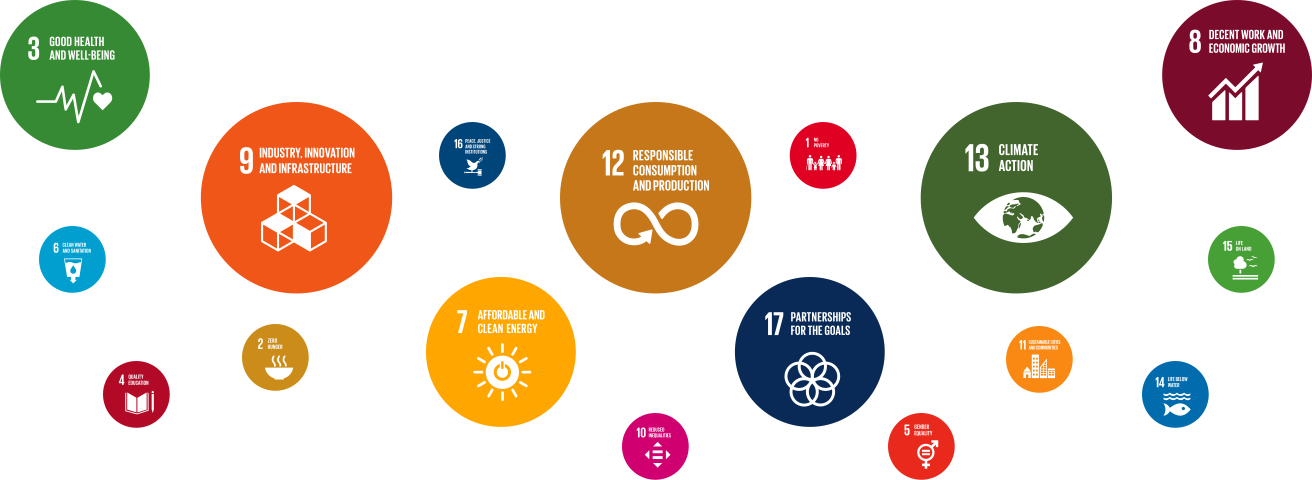
Sustainability Issue aligned with Sustainable Development Goals (SDGs)


Operating in accordance with the principles of the United Nations Global Compact.
The company recognizes the importance of supporting the global agreements of the United Nations and is committed to operating in line with international sustainability principles to contribute to the achievement of the United Nations Sustainable Development Goals (UN SDGs). This framework guides the organization in its sustainability efforts.
Sustainability Issues Analysis
The Company evaluates and prioritizes sustainability issues of mutual importance to both the Company and stakeholders, considering risk factors throughout the supply chain in accordance with the GRI (Global Reporting Initiative) Standards 2021. In 2025, the Company and stakeholders identified 19 key sustainability issues.
Number of Material Sustainability Issues
High Materiality
Medium Materiality
Low Materiality

Governance and Economy Dimension
Operates to achieve its vision and mission based on stakeholder satisfaction and maximizing benefits.
Sustainability Issues
Sustainable Development Goals (SDGs)


Social and Human Rights Dimension
Conducts business ethically, taking responsibility for and caring for communities and society both within and outside the service area.
Sustainability Issues
Sustainable Development Goals (SDGs)


Environmental Dimension
Committed to environmental care within the production process, valuing resource efficiency, conservation of natural resources, and sustaining a balanced and sustainable environmental system.
Sustainability Issues
Sustainable Development Goals (SDGs)

Governance / Economic Dimension
1. Tax Management
GRI Disclosure: GRI201-1, GRI201-3 to GRI201-4, GRI207-1 to GRI207-4
| Guidelines | Method | Risk | Opportunity |
|---|---|---|---|
| The Company complies with applicable tax policies and fulfills its obligations as a taxpayer in accordance with relevant laws and regulations. It also applies legitimate tax practices to ensure appropriate and lawful tax incentives, consistent with transparent, fair, and responsible business conduct. | Coordinate and engage with government tax authorities by providing accurate and factual tax information in accordance with the Company’s business operations. | Inaccurate or incomplete tax management may result in adverse business impacts, including financial consequences, reputational damage, and loss of business opportunities. | Full compliance with applicable laws helps strengthen investor confidence and enhances trust among stakeholders. |
| The Company provides training and advisory support to internal departments and employees on tax matters to ensure compliance with applicable tax laws and regulations. | Supports sustainable business growth and promotes transparency. | ||
| The Company engages qualified and experienced tax advisors to provide professional guidance, ensuring transparency and compliance with applicable laws and regulations. |
2. Corporate Governance
GRI Disclosure: GRI2-9 to GRI2-30, GRI206-1, GRI405-1 to GRI405-2, GRI406-1, GRI411-1
| Guidelines | Method | Risk | Opportunity |
|---|---|---|---|
| The Company adheres to its corporate governance policy, encompassing the roles and responsibilities of the Board of Directors, transparency practices, and reporting obligations. | Review of the Corporate Governance Policy. | Non-compliance with the Company’s business ethics may adversely affect stakeholder confidence and the long-term sustainability of the business. | Strong corporate governance principles, transparency, and comprehensive risk management covering economic,social, and environmental dimensions enhance investor confidence and support sustainable investment in the long term. |
| Reporting of corporate governance performance to the Risk Management, Corporate Governance, and Sustainability Committee. | |||
| Conduct business in an ethical manner. | |||
| Communicate and provide training on business ethics to employees at all levels. | |||
| Publish business ethics guidelines and related knowledge on the Company’s website. |
3. Anti-Corruption
GRI Disclosure: GRI205-1 to GRI205-3
| Guidelines | Method | Risk | Opportunity |
|---|---|---|---|
| The Company complies with its anti-corruption and anti-bribery policy, business ethics, and all applicable rules, regulations, and internal requirements. It is committed to ensuring that it does not engage in any form of corruption, whether directly or indirectly. | Perform duties with transparency. | Non-compliance with the Company’s anti-corruption and anti-bribery measures, as well as its business ethics guidelines, may adversely affect stakeholder confidence and the long-term sustainability of the business. | Compliance with the Company’s anti-corruption and anti-bribery measures, as well as its business ethics framework, strengthens stakeholder confidence and supports long-term business sustainability. It also helps mitigate risks and reduce potential damages arising from corruption. |
| Refrain from any actions that may be perceived as corrupt practices, bribery, or improper provision or acceptance of benefits involving parties related to the Company, whether directly or indirectly, in matters under one’s responsibility. | Corruption-related impacts or damages may result in financial and non-financial losses. | ||
| Do not ignore or neglect any observed actions that may be considered fraud or corruption related to the Company. | |||
| Refrain from providing any payment, gifts, valuables, or services, whether directly or indirectly, to induce any person to act or refrain from acting in violation of applicable laws. |
4. Risk Management
GRI Disclosure: GRI201-2
| Guidelines | Method | Risk | Opportunity |
|---|---|---|---|
| Manage enterprise risks within acceptable levels, while fostering a risk management culture as an integral part of the organization’s culture. | Review of the Risk Management Policy. | In the current environment, new and unpredictable risks continue to emerge, which may adversely affect the Company’s business operations. | Risk management is a key element in preparing the organization to respond to uncertainties that may impact its objectives. |
| Review of the Enterprise Risk Assessment. | Enable effective risk planning and management. | ||
| Analysis and review of sustainability risk assessment (ESG). | Support informed decision-making and help mitigate potential future impacts. | ||
| Analysis and assessment of emerging risks within the organization. | |||
| Provide risk management training programs for directors, executives, and employees. | |||
| Report risk management performance to the Risk Management Committee and the Corporate Governance and Sustainability Committee on a defined periodic basis. |
5. Business Continuity
GRI Disclosure: GRI2-6, GRI201-2
| Guidelines | Method | Risk | Opportunity |
|---|---|---|---|
| Business Continuity Management (BCM) enables the organization to deliver products and services at an acceptable level within defined timeframes, even during business disruptions. | Review the Business Continuity Management system to ensure preparedness for unexpected incidents or disruptions. | Ineffective Business Continuity Management may lead to disruptions in business processes and negatively impact the organization’s financial performance, reputation, and competitiveness. | Business Continuity Management (BCM) is a key mechanism that enables the organization to effectively respond to business uncertainties and emergencies, minimize operational disruptions, and support rapid recovery. |
| Conduct emergency drills and response exercises in accordance with established plans to ensure business operations can continue with minimal disruption. |
6. Products and Services Responsibility
GRI Disclosure: GRI203-1 to GRI203-2, GRI416-1 to GRI416-2, GRI417-1 to GRI417-3, GRI418-1
| Guidelines | Method | Risk | Opportunity |
|---|---|---|---|
| Responsibility for producing high-quality products and services that meet recognized standards, fostering strong customer relationships, and assessing potential impacts arising from the Company’s products and services. | Review of the Quality and Environmental Policy, including quality and environmental objectives. | Volatility in costs, changes in consumer behavior, exchange rate fluctuations, and environmental issues may impact liquidity, competitiveness, and customer confidence. | Drive the organization toward excellence in delivering high-quality products and services in accordance with international standards. |
| Standards for potable tap water production in terms of quality, adequacy, and continuity of supply. | Customer satisfaction with the Company’s products and services enhances organizational reputation and contributes to competitive advantage. | ||
| Quality Management System (ISO 9001) and Environmental Management System (ISO 14001). | |||
| Provide consultation and participate regularly in operational meetings and discussions. | |||
| Develop and provide training programs to enhance customers’ knowledge and competencies. | |||
| Support customer engagement and relationship-building activities. |
Social / Human Rights Dimension
1. Social Supply Chain Management
GRI Disclosure: GRI204-1, GRI414-1 to GRI414-2
| Guidelines | Method | Risk | Opportunity |
|---|---|---|---|
| Social supply chain management with business partners, including the selection of qualified suppliers, performance evaluation, traceability, and consideration of diversity and equity throughout the process. | Review of the Supplier Code of Conduct. | Social supply chain risks may arise that could affect business continuity, cause operational disruptions, and result in organizational impacts or damages. | Enhance opportunities, mitigate risks, and strengthen business competitiveness. |
| All suppliers acknowledge and comply with the Company’s Supplier Code of Conduct. | Strengthen suppliers and business partners to ensure long-term sustainability. | ||
| Support the procurement of goods and services that contribute to local economic development, employment, and income generation. | |||
| Conduct on-site ESG audits of key suppliers and high-risk suppliers to assess compliance at their facilities. |
2. Employment and Employee Stewardship
GRI Disclosure: GRI2-7 to GRI2-8, GRI201-3, GRI202-1 to GRI202-2, GRI401-1 to GRI401-3, GRI402-1, GRI405-1 to GRI405-2
| Guidelines | Method | Risk | Opportunity |
|---|---|---|---|
| The Company conducts workforce planning and talent acquisition from both internal and external sources to ensure an effective workforce pipeline. Recruitment and selection are based on merit, integrity, and competency, with consideration given to candidates’ qualifications, knowledge, and capabilities aligned with organizational requirements. | Review and enhance recruitment and hiring processes. | Increased employee healthcare costs. | Enhance the company’s reputation as an employer of choice, making it a desirable workplace for talent. |
| Promote fair and inclusive employment practices by providing equal job opportunities, including employment opportunities for persons with disabilities, to contribute to long-term social sustainability. | Changing employee expectations, resulting in increased organizational pressure to provide competitive compensation and benefits relative to other organizations. | Reduce employee turnover among current staff. | |
| Prioritize internal candidates for consideration before recruiting externally. | |||
| Review the employee performance evaluation process. | |||
| Review the compensation and benefits determination process. | |||
| Organize employee engagement activities. | |||
| Conduct employee satisfaction surveys and assess employee compliance with the Code of Conduct. |
3. Employee Potential Development
GRI Disclosure: GRI404-1 to GRI404-3
| Guidelines | Method | Risk | Opportunity |
|---|---|---|---|
| Promote continuous learning and development to enhance operational efficiency and meet stakeholder expectations, while strengthening employee engagement and a sense of belonging. This supports talent retention, reduces turnover, and contributes to sustainable business growth. | Review the employee capability development plan. | Intense business competition and increasing customer expectations have led to employee knowledge and skills not keeping pace with rapid changes. | Continuous investment in human capital development also strengthens competitive advantage by leveraging capabilities and innovation developed within the organization’s workforce. |
| Review the training plan for employees at all levels to ensure it is appropriate and effective. | People-related risks primarily arise from a lack of career advancement and professional development opportunities. | ||
| Build a strong corporate image through various online media channels to attract and engage younger talent, increasing awareness of the organization and positioning it as an attractive employer. |
4. Safety and Occupational Health Management
GRI Disclosure: GRI403-1 to GRI403-10
| Guidelines | Method | Risk | Opportunity |
|---|---|---|---|
| Ensuring employee well-being, workplace safety, and an appropriate working environment free from occupational accidents and work-related illnesses. | Review the occupational health, safety, and working environment policy. | Inadequate safety management may adversely affect employee health and safety, cause disruptions to production processes, and generate cascading impacts across the supply chain. It may also damage the organization’s reputation and undermine stakeholder confidence. | Ensure that employees and contractors can perform their work safely, while minimizing risk factors and potential impacts on both employees and contractors. |
| Provide annual health check-ups for employees and introduce additional specialized health screenings for employees working in high-risk areas and those aged 35 years and above. | This establishes a strong foundation for the company to become a sustainability leader, enhances operational processes, and fosters a strong safety management culture. | ||
| Assess environmental factors that may affect employee health and safety, such as lighting, noise, dust, and pollution. | |||
| Provide regular safety training and knowledge development. | |||
| Conduct regular emergency drills in accordance with the emergency response plan to ensure preparedness for crisis situations. | |||
| Conduct an annual review of risks and emergency incidents in operational processes. |
5. Social and Community Stewardship
GRI Disclosure: GRI413-1 to GRI413-2, GRI415-1
| Guidelines | Method | Risk | Opportunity |
|---|---|---|---|
| Conduct business alongside improving the quality of life of local communities in areas of operation by promoting participation in community and social development initiatives related to the business, with the aim of enabling communities and society to become self-reliant. | Develop community engagement programs in areas of operation. | The company’s operations in various areas inevitably impact stakeholders and nearby communities. Inadequate community management may undermine trust and affect the long-term sustainability of the business. | Consumers and investors increasingly prioritize business sustainability. Environmentally and socially responsible investment has therefore become a key opportunity to create differentiation and competitive advantage, while also mitigating potential future business risks. |
| Improve the quality of life of persons with disabilities and the underprivileged. | Assess the community impacts arising from the company’s business operations. | ||
| Environmental and social stewardship in local communities. | Leverage business expertise and capabilities to support local communities in order to enhance quality of life (CSR in process). | ||
| Encourage employees to actively participate in delivering value to local communities. | Conduct surveys to gather community satisfaction and feedback. | ||
| Conduct joint meetings to address and resolve community issues. |
6. Respect for Human Rights
GRI Disclosure: GRI406-1, GRI407-1, GRI408-1, GRI409-1, GRI418-1
| Guidelines | Method | Risk | Opportunity |
|---|---|---|---|
| Adhere to the United Nations Guiding Principles on Business and Human Rights to prevent and avoid human rights violations, and to foster an organizational culture that fully respects human rights. | Review the privacy policy and the human rights and non-discrimination policy. | Human rights violations may lead to legal, reputational, and stakeholder trust risks, and may adversely affect the company’s image and business operations, including potential rejection of its products and services. | Respecting human rights within the organization is not only a legal obligation but also a key strategic approach that enhances stakeholder trust, reduces risks, and creates new opportunities in human rights–conscious markets. |
| Support and promote human rights both within and outside the organization. | No employment of child labor under the age of 15, forced labor, or illegal migrant labor. | ||
| Mitigate human rights impacts across the value chain through human rights due diligence (HRDD) processes and governance in accordance with international standards. | Ensure that pregnant employees are not assigned to work that may pose risks to their health or physical well-being, in accordance with applicable laws. | ||
| Support the prevention of human rights violations in all employment practices. |
Environmental Dimension
1. Environmental Supply Chain Management
GRI Disclosure: GRI308-1 to GRI308-2
| Guidelines | Method | Risk | Opportunity |
|---|---|---|---|
| Manage environmental aspects across the supply chain in collaboration with business partners, including engaging suppliers in product development to reduce environmental impacts. | Review the quality and environmental policy, including quality and environmental objectives. | Risk of business disruption, which may directly impact the company’s operations as well as stakeholders across the supply chain. | Competitive advantage and enhanced business value. |
| Review the Supplier Code of Conduct. | Reduce long-term costs through efficient resource utilization. | ||
| All suppliers are informed of and comply with the quality and environmental policy, as well as the Supplier Code of Conduct. | Reduce legal and reputational risks. | ||
| Adopt green procurement practices by sourcing environmentally friendly goods and services. | Reduce legal and reputational risks. | ||
| Comply with applicable national and local environmental laws and regulations. | |||
| Require suppliers to conduct business in compliance with occupational health, safety, and working environment laws and regulations. |
2. Using Resources Efficiently
GRI Disclosure: GRI3-1 to GRI3-3
| Guidelines | Method | Risk | Opportunity |
|---|---|---|---|
| A process that enables an organization to utilize resources at maximum efficiency. | Review the quality and environmental policy, including quality and environmental objectives. | The excessive use of natural resources leads to resource scarcity. | Efficient resource management not only enhances productivity but also reduces costs and waste, improves operational efficiency, and strengthens competitive advantage. |
| Set targets for resource consumption, such as water, chemicals, and electricity. | Disruptions in raw material supply and declining material quality may lead to supply chain interruptions, affecting production processes of business partners, employee operations, delivery delays to customers, and potential deterioration in product quality. | ||
| Efficient resource management. |
3. Waste and Unused Materials Management
GRI Disclosure: GRI301-1 to GRI301-3, GRI306-1 to GRI306-5
| Guidelines | Method | Risk | Opportunity |
|---|---|---|---|
| Efficient resource utilization, waste reduction, and increased waste recovery and reuse. | Review the quality and environmental policy, including quality and environmental objectives. | Waste generated from the tap water treatment process may negatively impact surrounding communities and the environment if not properly treated and disposed of. | Research and develop waste (sludge) into value-added products by applying the 3Rs principles and the circular economy approach, with the aim of utilizing the resulting products to support communities within the service area. |
| Set waste management targets. | In the future, environmental regulations may increase waste management costs. | ||
| Manage waste to ensure it does not adversely impact business operations or stakeholders. |
4. Water Management
GRI Disclosure: GRI301-1 to GRI301-3, GRI303-1 to GRI303-5
| Guidelines | Method | Risk | Opportunity |
|---|---|---|---|
| Allocate and utilize water resources for the tap water production process responsibly, while conserving and restoring water sources to ensure their long-term sustainability. This also includes addressing water-related challenges in both quantity and quality. | Review the quality and environmental policy, including quality and environmental objectives. | Severe floods, water-related disasters, and droughts resulting from climate change may impact water resources and the company’s supply chain and business operations. | Opportunities to develop smart water monitoring systems, water-saving devices, and advanced wastewater treatment systems. |
| Set targets for water consumption reduction. | Changes in water resource laws and water management policies, such as amendments to the Water Resources Act, may lead to increased raw water costs. | Integrated water management services, including consulting on water management system design. | |
| Reuse effluent water from the sludge dewatering process in the tap water production process. | Failure to properly manage wastewater or conflicts over water use with local communities may negatively affect the company’s reputation and corporate image. | Invest in systems to treat and recycle wastewater for reuse in production processes, such as converting condensate into clean water. This helps reduce raw water costs and minimize environmental impacts. | |
| Implement a project in collaboration with the Provincial Waterworks Authority (PWA) to meet public tap water demand and support equitable access to standardized potable water. | Poor water quality that does not meet standards may adversely affect the tap water production process. | Businesses certified under water stewardship standards (e.g., Alliance for Water Stewardship – AWS) may gain improved access to green financing opportunities. | |
| Monitor and manage water sources in collaboration with relevant external agencies. |
5. Energy Conservation
GRI Disclosure: GRI302-1 to GRI302-5
| Guidelines | Method | Risk | Opportunity |
|---|---|---|---|
| Promote efficient and cost-effective energy use by fostering awareness and a culture of responsible energy consumption, ensuring effective planning and control of energy usage, and increasing the use of renewable energy sources. | Review the quality and environmental policy, including quality and environmental objectives. | The current economy is highly vulnerable to fluctuations in global energy prices. Continued reliance on fossil fuels remains a major source of greenhouse gas emissions, contributing to global warming and representing a global challenge that all organizations in Thailand must collectively address. | Significant energy cost reduction enables the organization to reallocate savings to other areas, supporting further development and growth. |
| Set targets for energy consumption reduction. | New approaches to energy conservation and improved energy efficiency can drive innovation and foster continuous improvement within the organization. | ||
| Participate in energy conservation programs under the Department of Alternative Energy Development and Efficiency, Ministry of Energy. | |||
| Establish measures to control electricity consumption within the organization. | |||
| Implement energy-saving initiatives by utilizing clean energy sources such as rooftop solar systems and floating solar systems. |
6. Climate Change Management
GRI Disclosure: GRI305-1 to GRI305-7
| Guidelines | Method | Risk | Opportunity |
|---|---|---|---|
| Establish targets, policies, and strategies for greenhouse gas emission reduction, climate risk management, and implementation plans, as well as review and monitor performance against defined action plans. | Review the quality and environmental policy, including quality and environmental objectives. | Climate change risks, as well as risks arising from natural disasters, may adversely affect the company’s operations and potentially disrupt business continuity across the value chain. In addition, they may impact asset valuation, overall business value, and employee safety. | Invest in natural gas as a cleaner energy source than oil, while exploring ways to reduce greenhouse gas emissions in alignment with Nationally Determined Contributions (NDC) targets. |
| Review the greenhouse gas management policy. | |||
| Review greenhouse gas emission reduction targets. | |||
| Review the composition and roles of the Sustainability Committee and the Sustainability Development Working Group. | |||
| Implement the Corporate Carbon Footprint (CFO) and Product Carbon Footprint (CFP) programs. | |||
| Collaborate with the Thailand Greenhouse Gas Management Organization (Public Organization) to support the transition toward net zero greenhouse gas emissions by 2050. | |||
| Implement a green procurement program for environmentally friendly goods and services. | |||
| Promote greenhouse gas emission reduction within the organization. |
7. Biodiversity Management
GRI Disclosure: GRI304-1 to GRI304-4
| Guidelines | Method | Risk | Opportunity |
|---|---|---|---|
| Conserve, protect, and promote the sustainable use of biodiversity resources for the benefit of local communities. | Review the quality and environmental policy, including quality and environmental objectives. | Inadequate biodiversity risk management and insufficient consideration of business impacts may lead to shortages of critical resources essential to business operations, as well as potential conflicts over resource utilization in the future. | Effective biodiversity management can reduce the risk of resource scarcity and lower associated costs. |
| Develop a biodiversity policy. | Biodiversity loss is an urgent business risk that directly affects supply chains and operating costs. | ||
| Install screening systems at raw water intake pipes to prevent fish and aquatic animals from entering the production process. | |||
| Reuse effluent water from the sludge dewatering process in the tap water production process to prevent wastewater discharge into the Tha Chin River and Chao Phraya River. | |||
| Organize awareness campaigns to promote the conservation of the Tha Chin River and its connected canals. | |||
| Implement a composting project to promote soil conservation and environmental protection, while reducing the volume of waste sent for disposal. | |||
| Implement a project to assess greenhouse gas emissions from business operations. | |||
| Control air pollutant emissions from the production process. |
